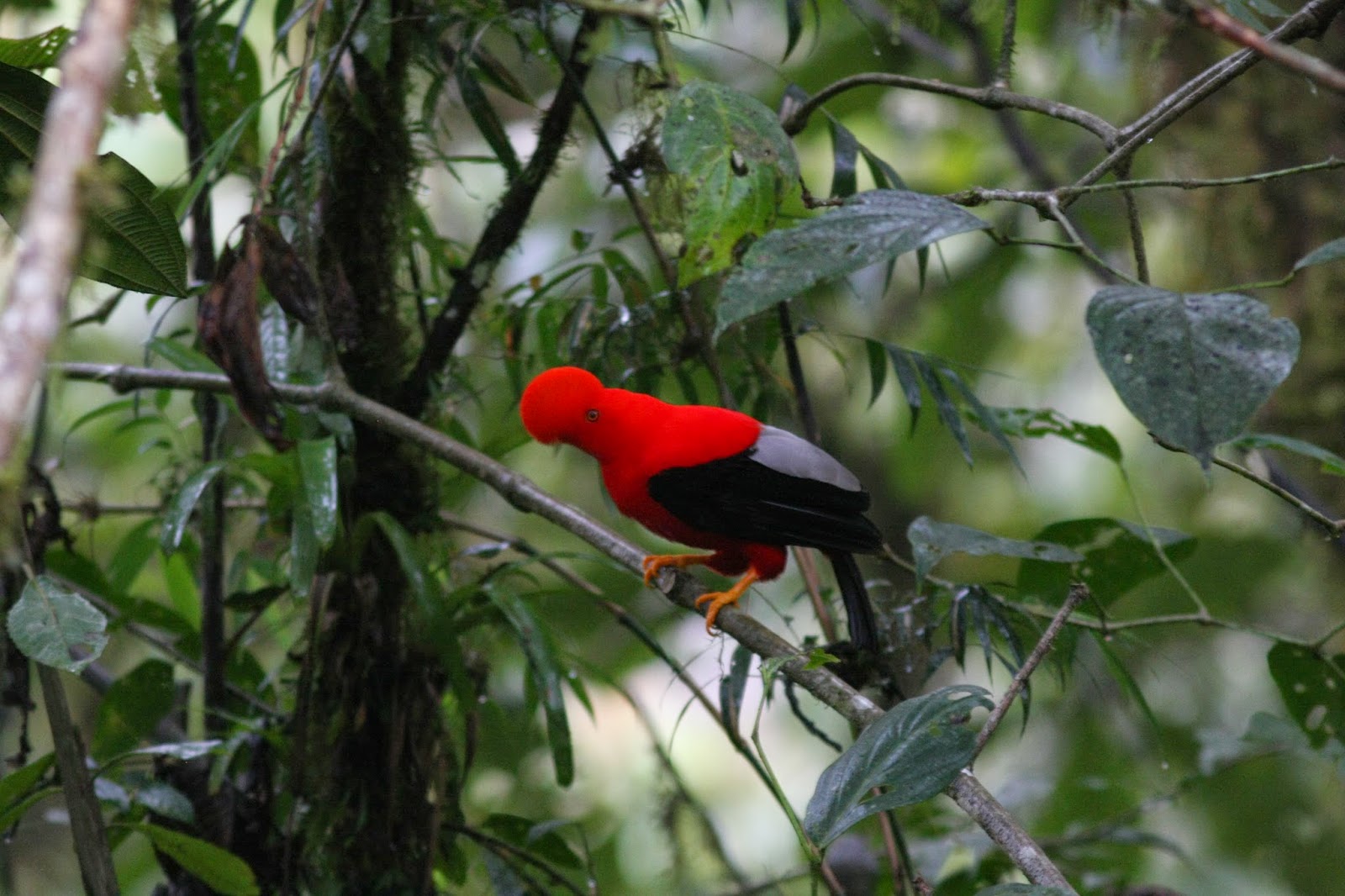
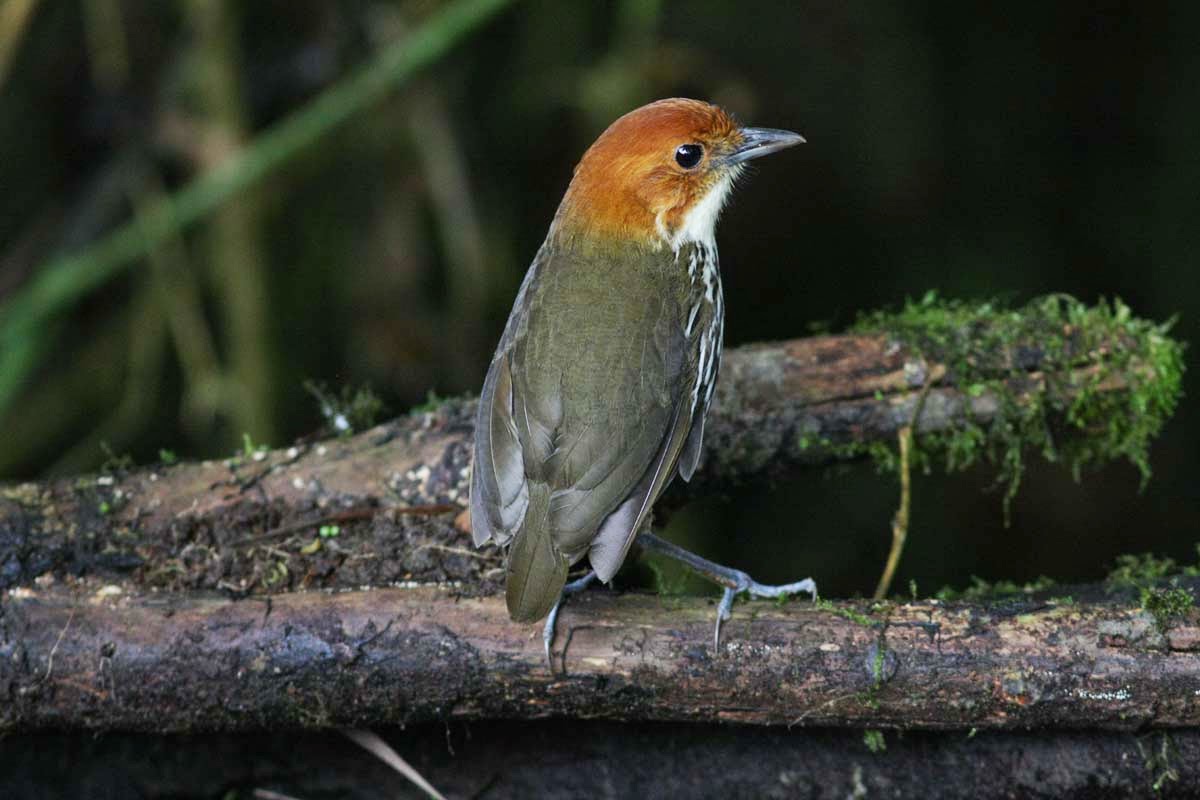
I was in the doldrums. I always am after returning from birding in exotic parts of the world. I just cannot seem to raise the enthusiasm to get back into British birding. Well not for some time anyway.
However on Thursday evening the 30th October an email arrived from Dusan in far off Ecuador.
'Have you been to see it yet?'
See what I wondered. I had been lax, distracted by work issues and had not checked my RBA (Rare Bird Alert) app. on my i-phone. I looked at it now in some trepidation. I scrolled down the screen and there it was - Eastern Crowned Warbler in Brotton, Cleveland! It had been found around lunchtime on Thursday and blissfully ignorant of the fact, my life had carried on as normal.
Not now though. This was only the third to be found in Britain. I had missed the first by a day and the second had been on private land and not viewable. This was my chance. Or was it? On Friday I had to go for an Xray at 9.30am and I estimated that I would not be able to leave Oxford until at least 1030 and a minimum of a four hour drive would get me to Cleveland at around 2.30pm not leaving much time to see the warbler, which apparently was quite elusive, before it got dark at around 4pm. An additional problem was the fact the beloved Black Audi's turbo was playing up and needed attention. Could I really risk it?
I rang Clackers on Thursday evening and he was willing to go.
'Let me mull it over Clackers and I will ring in the morning'.
The next morning I rang Clackers having, on the advice of the garage decided not to risk such a long journey with an ailing car, as they gave me dire predictions of much more costly engine damage if the turbo gave up the ghost. Short trips were OK but a long one a definite risk too far. Saturday was also out of the question, as apart from the lack of a car I was committed to go to Stratford upon Avon to see a play in the early evening with my wife and relatives.
All was not well and good with my world. A tweet had also arrived from Justin relating how he had gone for the warbler on Thursday and delayed by the inevitable roadworks and speed checks on the M1/AI Motorways only got to Brotton at just before 4pm, just missed seeing the warbler before darkness fell and then he had to turn round and drive straight back as his father had been taken ill.
An idea formed. Justin has a car, he will really want to see the warbler and if it is still there on Friday we could risk it and go in the early hours of Saturday morning, pray we see the warbler and hopefully be back mid afternoon so he could visit his father in hospital and I could still go to the theatre with my wife and her brother and sister in law. It seemed so simple. It all depended on Justin.
I rang Justin and proposed my plan. He was up for it.
'I will call you Friday evening if it is still there Justin'.
The warbler was still there at 4pm so I called Justin and we arranged to meet at 3am on Saturday morning outside his home in Bicester and drive to Brotton in Justin's car.
I risked driving the Audi the relatively short distance to Bicester and duly arrived at the appointed hour. Everything was loaded into Justin's car in double quick time and we headed off into the night.
Joining the Motorway and the first sign we see is
'M1 Motorway Northbound is closed Junctions 16-18'.
We followed a convoy of huge lorries re- routed onto a diversion round Daventry. We made it back onto the Motorway to be greeted by
'Average Speed Check 50mph!'
This was in force for the next twenty or so miles. Ye gods would we ever get there? I tried to stay awake but kept dozing off. Fortunately Justin didn't. Finally free of the speed restrictions the foot went down and we sped north leaving the M1 for the A1.
Not to be outdone the A1 had its very own '50mph Average Speed Check'.
I fell asleep again. On awaking we stopped shortly after for a toilet break at some foresaken, dreary and deserted garage by the side of the A1.
The facilities easily exceeded the often appalling standards that greet the weary road traveller if you venture away from the Motorway Services. Based on CAMROT rules (Campaign for Retention of Outside Toilets) I awarded it the highest honour possible - three bog brushes with bar. A wet, dank, unsanitary, germ ridden, toilet paper strewn, festering, tiled brick square greeted us for which we suffered the additional insult of having to pay 20p to access this disgrace. What is it with this country and toilets? Why are they not looked after and kept clean? The garage was obviously to blame for not checking it and keeping it presentable but so are the people who mis-use it.
Hopefully germ free we carried on up the A1 and the dawn slowly materialised as we passed the North Yorkshire Moors. The lower slopes of the impressive crags were blanketed a deep orange as a forest of deciduous trees, still retaining their leaves, had now turned a deep burnished gold due to the extended mild autumn. Slowly the sun rose and we drove along deserted roads that were golden leafed corridors of grey winding their way through the rural green of North Yorkshire. Ragged winged rooks and crows flew at the last possible moment from the road as we progressed and soon, as Justin already knew the way, we were easing our way through the modern housing of terraced and semi detached houses that is Brotton, parking in the very expansive and palatial Golf and Health Club at the end of the road. The car park was already almost full, presumably with birders cars, and I did briefly think that the golfers and Health Club members would not be happy when they arrived later that morning.
However this concern was soon forgotten as we walked the few yards to the small wood growing on a gentle slope on the opposite side of the road. The strip of woodland consisted of small trees, mainly Sycamores and up to about fifty birders were scattered around, standing in clearings, some trying to shake off the early morning tiredness and look interested, others peering hopefully into tree tops and yet more hanging around with small dogs on very long leads that were just asking to be tripped over. It is unusual to see so many dogs at a twitch but there is a first time for everything. It was obvious no-one had yet seen the warbler. Was it even still here?
We stood quietly within the wood getting our bearings and glad to be out of the car. Justin having been here already on his abortive trip a couple of days ago knew the lie of the land. We walked the short distance through the wood to the other side. Nothing untoward was seen or heard by anyone. Someone claimed to have seen a warbler drop down in the leafy distance. Everyone gravitated to where he indicated but it was a false alarm. I went to the not very far edge of the wood and stood with a few others by some scattered trees leaving the main crowd further back in the wood. Someone then claimed to have briefly seen a small bird up amongst the leaves of the closest tree to us. Staring hard and longingly at the leaves I could detect nothing. Another person said they could see something the other side of the tree. We all walked round to that side but no one could see anything there. We arrived back where we had started and then finally someone saw a warbler near the top of the tree and confirmed it was the Eastern Crowned Warbler. Mild panic ensued. He gave directions, spouting off the usual confusing details of leaves, twigs, branches etc. Then and there I decided to go for my tropical rain forest technique honed to perfection on my recent trip to Ecuador. I just focused my bins on the general area being referred to, hoped, and it worked. Bang slap in the bins was the Eastern Crowned Warbler perched amongst the leaves. Small, insignificant and very well camouflaged.
It was now my turn to announce I could clearly see it and issue my version of hopeless directions. I could see it beautifully but dared not lower my bins. It sat side on showing its long pale supercilium, black eye stripe, moss green upperparts, wing bar and white underparts. It was slow moving, almost sluggish for a warbler and allowed a prolonged, well, a minute or two, look, before then turning to face me. I kept repeating what it was doing and where it was for Justin's benefit and a lady behind me confirmed loudly she too could now see it. Justin was right behind me but could not locate it. I kept on, in increasing desperation, issuing guidance for what that was worth but he could not see it amongst the leaves, that were slowly fluttering in the breeze. It's happened to all of us, knowing it's there right in front of you but just being incapable of finding it. The warbler moved downwards, was lost to view behind the leaves but then popped up again but still Justin could not get it. Then it flew away, fast to our left and was gone. Justin saw a small flying shape and that was all.
For me it was great. I had seen the warbler really well but my feeling of triumph was muted by disappointment for Justin. He had still to see it properly. We were birding buddies and the ultimate is to share the triumph. At the moment it was one sided. We followed in the direction the warbler had flown but there was no sign of it.
The time passed and the warbler was still lost to view from the increasing number of birders, probably nearing a hundred now, scattered through the wood. Justin and I split up, occasionally meeting, conferring and confirming there was still no sign of the bird. Surely, soon, someone would locate it? I wandered off and stood under some low Sycamores next to a young birder from Leeds who had been with me early on and saw the warbler at the same time. We chatted about this and that when a movement in the leaves above us betrayed a warbler right above our heads. We looked up. What was it? I could only see its undersides but eventually I saw a side on view. It was a Common Chiffchaff. The crowd had noted our concentrated focus on the tree and gathered nearby on the other side looking intently. Someone announced he had 'got it'. What he should have said was he could see a warbler. He was looking at the same Common Chiffchaff we were looking at.The crowd pressed in on him thinking he could see the Eastern Crowned Warbler only to be disappointed as they too realised it was only a Common Chiffchaff.
 |
| If you go down to the woods today ............................ |
The crowd slowly moved back and fore through the wood, some actively looking whilst others were content to stand and wait for others to do the job. I moved back to where I had seen the Common Chiffchaff, as the trees looked particularly good there. I stood with the lad from Leeds and a couple of other birders. Another movement. I looked in my bins, through the nearest leaves and twigs, and saw in the branches and leaves beyond a wing bar and then a supercilium which set my pulse going.
The warbler moved out onto an open twig. A full view of - a Yellow browed Warbler!
Although a good find it was not the desired Eastern Crowned Warbler. We wandered back in the direction of where we had originally seen the Eastern Crowned Warbler. A grating chay chay chay call came, distinctive and loud. Willow Tit! I had not seen one in years and was soon watching one flitting through a hawthorn. I wandered on and then, returning through the wood found a scrum of fifty or so birders all looking intently in one direction. The elusive Eastern Crowned Warbler had been found and shortly after I was greeted by an ecstatic Justin who had seen it really well. Now we could both relax and enjoy the day.
We decided to wait for one more view of the warbler and then we would go. The wait went on for quite some time but finally it was discovered again in what turned out to be a bit of a restricted viewing area requiring some genteel and subtle elbow work to fend off anxious latecomers as we watched it feeding in some low Sycamores at just above eye level. It was difficult to see as its movements were slow and if it was behind a leaf one person could see it whilst often the person next to you could not due to the angle of viewing and lack of movement. Justin and I watched the warbler briefly showing parts of itself before disappearing again. A minor verbal fracas ensued between a photographer and an over enthusiastic birder who pushed a little too close for comfort in his anxiety to see the bird. It was all totally un-necessary and the photographer should be ashamed of his language.
I walked off and called to Justin as I did not care for this behaviour. We got to the end of the wood again and a birder motioned to me to come over and join him.
Although a good find it was not the desired Eastern Crowned Warbler. We wandered back in the direction of where we had originally seen the Eastern Crowned Warbler. A grating chay chay chay call came, distinctive and loud. Willow Tit! I had not seen one in years and was soon watching one flitting through a hawthorn. I wandered on and then, returning through the wood found a scrum of fifty or so birders all looking intently in one direction. The elusive Eastern Crowned Warbler had been found and shortly after I was greeted by an ecstatic Justin who had seen it really well. Now we could both relax and enjoy the day.
We decided to wait for one more view of the warbler and then we would go. The wait went on for quite some time but finally it was discovered again in what turned out to be a bit of a restricted viewing area requiring some genteel and subtle elbow work to fend off anxious latecomers as we watched it feeding in some low Sycamores at just above eye level. It was difficult to see as its movements were slow and if it was behind a leaf one person could see it whilst often the person next to you could not due to the angle of viewing and lack of movement. Justin and I watched the warbler briefly showing parts of itself before disappearing again. A minor verbal fracas ensued between a photographer and an over enthusiastic birder who pushed a little too close for comfort in his anxiety to see the bird. It was all totally un-necessary and the photographer should be ashamed of his language.
I walked off and called to Justin as I did not care for this behaviour. We got to the end of the wood again and a birder motioned to me to come over and join him.
'You can see it in that tree with your naked eye. See its silver breast, shining in the sun, sat up in that tree over there?'
Sure enough there was the Eastern Crowned Warbler sitting in clear view high in the tree, apparently luxuriating in the sun and having a quiet moment.
It sat there, not really moving for a few minutes and occasionally on bending its head downwards you could see the distinctive pale median crown stripe running down the centre of its grey crown.
Finally it dropped down lower in the tree and was hidden by the leaves before it flew back into the centre of the wood.
'That will do for me. You seen enough Justin?'
 |
| The final showing |
 |
| Eastern Crowned Warbler |
'That will do for me. You seen enough Justin?'
'Yep, let's go'.
We left the wood and commenced walking down to the car. Many more birders were arriving but we were in that golden time where the world becomes a wonderful place and the anxiety of planning and risk taking for a long distance twitch has all proved worthwhile. There is no better feeling.
An uneventful but tedious four hour drive back along busy motorways on a now sunny and very mild day brought us to Bicester at just after 1pm. Home, some lunch and a nap.
 |
| Smug? Us? Surely not! Justin and Ewan- a triumphant selfie |
The play 'Much Ado about Nothing' was really good too.
A brilliant day all round.
[Thanks to Justin for the location photos]
The final instalment of Gracias Ecuador will follow soon
A brilliant day all round.
[Thanks to Justin for the location photos]
The final instalment of Gracias Ecuador will follow soon